Telling Time Games for Kids
Learning to tell time works best in small steps: first the hour hand, then half past, then quarter past and quarter to, then five-minute jumps and finally single minutes. The games below cover each step, from an…
See the gamesThese free telling time games and clock tools take kids from o'clock and half past all the way to reading time to the minute.
About telling time games for kids
Learning to tell time works best in small steps: first the hour hand, then half past, then quarter past and quarter to, then five-minute jumps and finally single minutes. The games below cover each step, from an interactive analog and digital clock to fast arcade practice.
Our picks
 Time-Learning Clock
An interactive analog and digital clock with minute markers and a 12 or 24-hour option. The best place to start.
 Time Clock
A clock you set yourself, ideal for practising o'clock, half past and quarter hours.
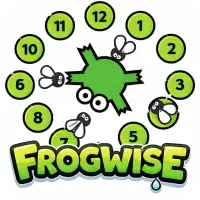 Frogwise
A silly arcade game that teaches where each number sits on the clock face and what clockwise means.
 Time Playground: Flight
A Hexawords original where kids read clocks in a story setting.
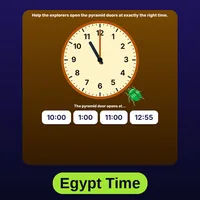 Time Playground: Ancient Egypt
Another original time adventure, set in Ancient Egypt.
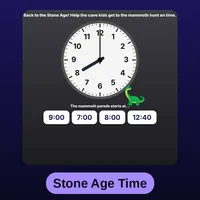 Time Playground: Stone Age
Stone Age themed telling time practice.
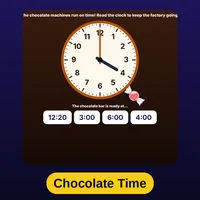 Time Playground: Chocolate Factory
Chocolate factory themed clock reading.
 Classroom Timer
A visual countdown that helps kids feel how long a minute really is.
 Stopwatch
Time tasks and beat personal bests, a fun way to understand seconds and minutes.
Tips for learning
- Start with o'clock times only, then add half past.
- Count by 5s around the clock to read minutes.
- Ask 'what time will it be in 10 minutes?' to build elapsed time skills.
- Link times to daily routines like breakfast and bedtime.
What kids learn
- Telling time
- Counting by 5s
- Fractions of an hour
- Elapsed time
For parents and teachers
Most children start reading o'clock times around age 5 or 6 and can read to the minute by about 8. Short, frequent practice beats long sessions.
Tips & Tricks
Beginner
Start with o'clock times only, then add half past.
Pro
Link times to daily routines like breakfast and bedtime.
Educational Importance
Telling time is a daily life skill and uses counting by 5s, fractions (half, quarter) and number sense.
Discover More Games
Let's Play!
🚀 Get Started Now: Challenge yourself and discover how fun and educational gaming can be!
▶ Play Now